Financial difficulties have been consuming me lately, eating up a great of my free time as I scramble to make ends meet and try to improve my work situation. Nuff said.
I've decided to put myself on a weekly writing schedule: one new entry here every Thursday. It will usually be a Featured Creature, possibly other snippets from the larger manuscript as I develop it, and/or occasionally some 5e material. Now and then, I'll review an animal fantasy work (novel, movie, etc.) that can serve as an inspiration for a Great & Small character, adventure, or campaign.
I hope to be ready with the final manuscript by the end of this year. Please stay tuned, and thank you for your interest and support.
And apologies for the long absences.
Showing posts with label Reviews. Show all posts
Showing posts with label Reviews. Show all posts
Thursday, June 30, 2016

Friday, January 8, 2016
Review -- The Book Of The Dun Cow

Set in a distant time before Man, when the sun still orbited the Earth and animals could still speak, the stakes in Wangerin's tale couldn't be any higher: there is a horrible evil rising in a distant land, that threatens the very pillars of creation. Its vile army of monsters and dark magic spreads at a rapid pace, and few in its wake are willing to acknowledge its coming before it is too late for them. So it falls to a noble rooster king, Chauntecleer, and the common-folk animals of his kingdom to rise to the occasion and save the world, perhaps at the cost of their own lives.
Like C.S. Lewis's Narnia (another big influence on Great & Small), The Book Of The Dun Cow is a Christian fable cloaked in an epic fantasy story, but is so well done that it transcends its own religious identity to become something with more universal appeal. When I first read it back in high school (aka, the Pleistocene Era), I couldn't help but see it as at least a thematic cousin to Tolkein's great trilogy as well as Lewis's series. It just feels like an epic medieval fantasy, despite the lack of swords, elves, and castles. Indeed, I distinctly remember pitching it to a friend as, "Animal Farm meets The Lord Of The Rings."

Also like LOTR, Dun Cow features monsters that would become staples of nearly every version of the D&D game and its imitators. Tolkein had dragons and orcs, of course. This novel has basilisks and their master, the Cockatrice, with their powers pretty much straight out of (or into?) the Monster Manual.
Winner of the National Book Award in 1980, Dun Cow was considered a surefire future classic, but seems to have fallen into obscurity among fantasy fans since then... a fate it does not deserve. In my opinion, it's not just the definitive animal fantasy novel, but a great fantasy novel, period. It has pride of place on my shelf alongside Tolkein, Lewis, Lackey, and Tad Williams' Tailchaser's Song, as one of those fantasy books I keep coming back to and always seems fresh, revealing new depths every time it's read.
 Contrasted with Watership Down -- which was essentially a sandbox hexcrawl with rabbits -- Dun Cow is more of a scripted campaign with a multi-racial adventuring party. It's a great model for how to integrate characters of multiple species who might otherwise be antagonists to one another into a cohesive unit bound by loyalty and mutual affection. In addition to Chauntecleer the rooster, the main heroes include a depressed dog, a family of mice, and a weasel. Even ants get in on the action.
I loved Watership Down, as both a kid and an adult. But it was The Book Of The Dun Cow that first made me want to play D&D with animal PCs. If you haven't already, I recommend you read it, and see if it has the same effect on you.
Thursday, October 22, 2015
Halloween Setting Spotlight -- Ravenloft's Wildlands
Who says
animal fantasy can’t be dark and gloomy with the best of them?
Islands Of Terror, the old AD&D 2nd supplement for the Ravenloft campaign setting, contained a fascinating domain called the Wildlands, which was populated entirely by talking animals, and ruled by a crocodile darklord.

Islands Of Terror, the old AD&D 2nd supplement for the Ravenloft campaign setting, contained a fascinating domain called the Wildlands, which was populated entirely by talking animals, and ruled by a crocodile darklord.
The main problem with the domain is
that it provided few Gothic horror role-playing opportunities for standard longpaw characters, and seemed designed
to serve mostly as a meat-grinder where every creature you meet is out to kill
you.
But the Wildlands can make an
excellent Gothic horror-fantasy setting for animal player characters,
whether native to the domain, or drawn in by the Mists.

The darklord -- Death Bringer, King
Crocodile -- is actually pretty good, as throw-away one-shot villains go.
His backstory is a classic tale of greed and power-lust: the other
animals of the wilderness realm from which the Wildlands was formed made a pact
with the Crocodile. He vowed to slay all the "hairless apes" in
the land, if each of the animals there would give him some of their
power. This, they did eagerly... and of course, when the slaughter was
done, Crocodile refused to return the borrowed powers. Instead, he began hunting
the other beasts. He was now the greatest animal in the realm, but his hubris
and ambition doomed him to be claimed by the Mists. Though not before a
python prophesied that Death Bringer would die either by the hand of a
"hairless ape," or from something he felt was beneath his notice.
Death Bringer can be greatly
fleshed-out using Great & Small's spandrels system. I'd start him as a
standard crocodile Warrior (I'll post game stats for crocs in the next couple
of days), then advance him by granting him a signature Species Trait from each
of the animal types listed in his back story. Say, Nine Lives from the
lions, an increased SZ from the elephants, Brachiation from the monkeys, Scent
from the apes, and so forth. This makes him a much more versatile
villain, something more like the monster from The Relic in terms of his
capabilities, rather than just being the "smarty pants giant croc" he
was in the original supplement.
The land itself is full of potential
adventure seeds, too, including:
- An elephant graveyard where elephant skeletons and ghosts walk at night, and the bones of the dead are rumored to turn into silver and gold
- A war for supremacy between lions and tigers (who weren't originally part of the land, but were apparently brought in by Ravenloft's Dark Powers for... reasons) that is consuming the savannah
- Colonies of gorillas who relish combat (especially with "hairless apes"), and try to enslave chimpanzees and monkeys
- A whole society of young crocodiles scheming to replace Death Bringer, the King Crocodile who serves as darklord of the realm
- The python's prophecy, and a total absence of snakes in the land (imagine the repercussions if a snake -- say, a snake player character -- arrived from beyond the Mists)
As a whole, the Wildlands exudes a
"dark Africa" feel, a sort of Lion-King-gone-sideways ambiance
where longpaws would come to dread an encounter with even the lowly monkeys.
But the Gothic horror elements --
especially the sense of foreboding, of isolation, of being trapped in a doomed
realm, of looming curses and twisted fates -- can be ramped up even better with
animal PCs. Longpaws would be walking targets everywhere they went, and
Death Bringer's agents would inform their master of the presence of any humans
in the realm long before those humans became aware of their ultimate enemy's
nature.
Animals, however, would have more
freedom to roam, to interact with NPCs, to pursue side-quests unrelated to the
Crocodile metaplot. Their time in the Wildlands wouldn't (necessarily)
turn into a gauntlet-running race against the clock, as it probably would with
longpaws in the mix.
African animals would be most
appropriate to the setting, of course, but any species -- especially prey
species -- would find the place terrifying and alienating in all the classic Gothic
horror ways that Ravenloft sought to evoke with longpaw characters.
So, if you're in the mood for some
old-school fantasy horror this Halloween, I challenge you to put away I6 for a
while, and treat your players to a session or two of Great & Small set in
the Wildlands. You could adapt any of the short adventures from Ravenloft
supplements like the Book of Crypts or Chilling Tales -- plot and
all -- simply by replacing the human NPCs with animal ones.
In fact, I might try this myself...
Another Good Review For Great & Small
+R. Scott Kennan has a tons o'fun-reading blog called Worlds Workshop, and a few days ago, he posted a kind little summary/spotlight/review on Great & Small.

Go read it here, and show your support of Mr. Kennan's excellent design work. Dem maps tho!
I'd really like to focus on, however, is the potential that this game offers to family game play. Young kids will probably love this game, with adult supervision to help with the rules.Even some older kids might like it.Plus, he used this nifty dino pic, which put me in mind to do an entire supplement:

Go read it here, and show your support of Mr. Kennan's excellent design work. Dem maps tho!
Wednesday, September 2, 2015
Great & Small Q&A at the Hardboiled GMShoe's Office
For those of you who missed it, the transcript of my Q&A with the Hardboiled GMshoe is now up on his blog site.
Thanks to Dan for hosting me. I appreciate the opportunity.
Thanks to Dan for hosting me. I appreciate the opportunity.
Saturday, August 29, 2015
My First Interview!
I'll be a doing a Q&A for Great & Small on the Hardboiled GMshoe's #rpgnet chat on Tuesday,
Sept. 1 at 7 p.m. CDT/5 p.m. PST.
http://tinyurl.com/rpgnetchat
Stop by and say hello, especially if you have questions or want to give me direct feedback.
http://tinyurl.com/rpgnetchat
Stop by and say hello, especially if you have questions or want to give me direct feedback.
Thursday, February 26, 2015
Word continues to spread...
Great & Small is now listed on Taxidermic Owlbear's database of D&D retroclones. Lots of good material there, and it's an honor to be included.
Wednesday, February 18, 2015
A Sandbox Hex-Crawl.... With Rabbits
Or, Using A Classic Animal Fantasy Novel As A Guide For Animal Fantasy Gaming
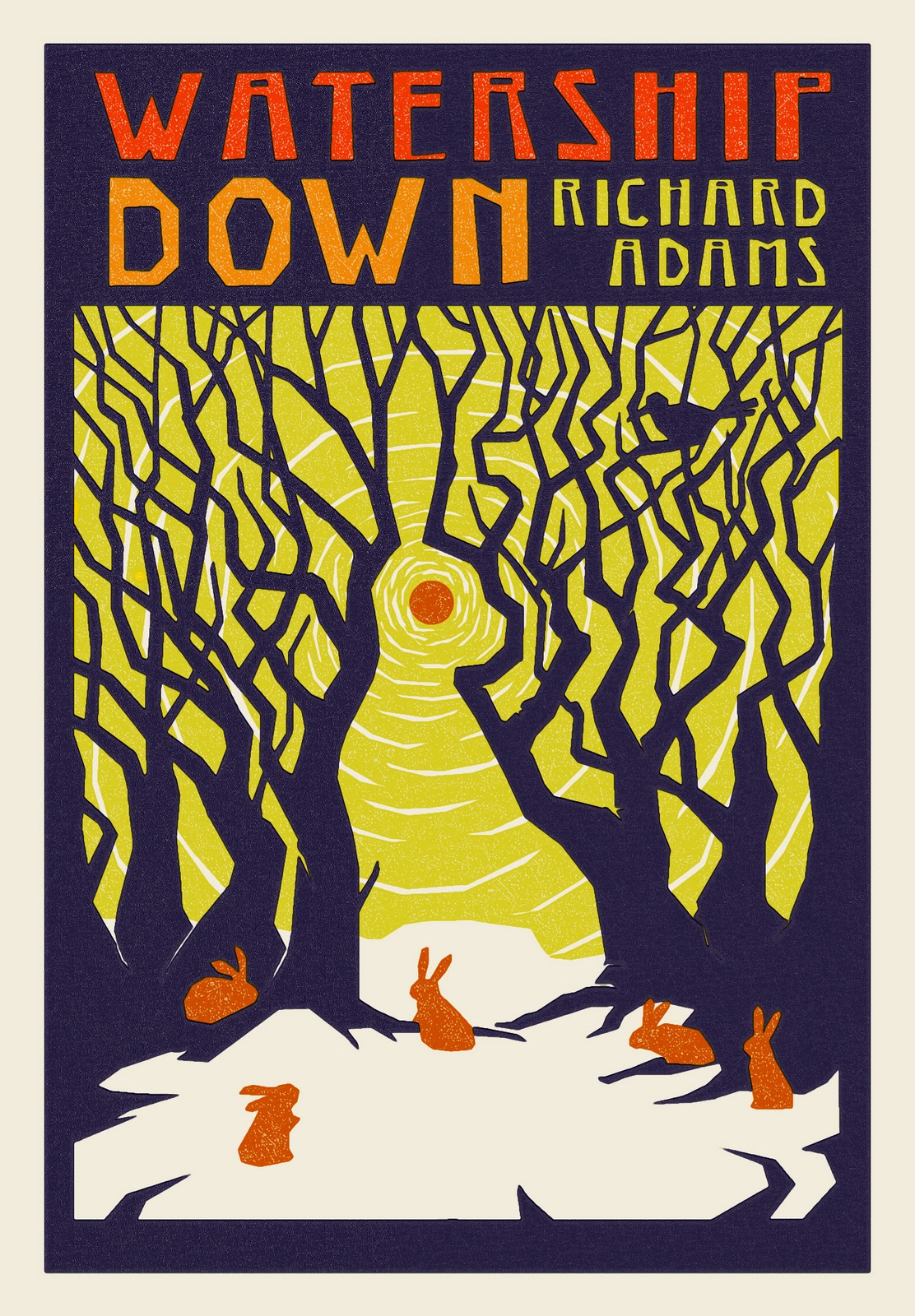
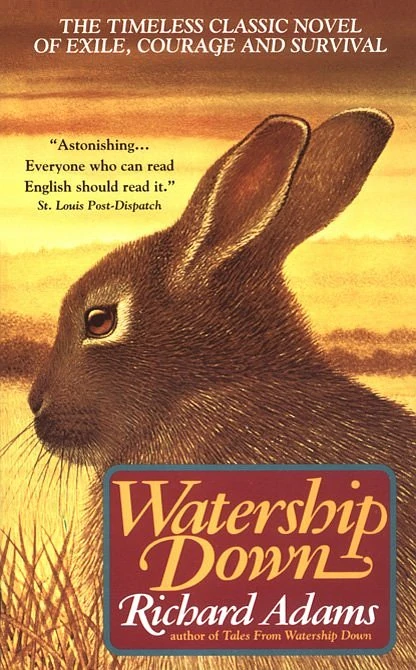
This is where it all began, not just for me, but for millions of other people all over the world. Out of all the works of animal fantasy, Watership Down is arguably the single novel of the genre with the biggest crossover appeal and success. The book has enchanted readers for over 40 years, and spawned two animated film adaptations (one for theaters and one for television).
 It wasn't the first, of course. As I've noted, the narrative convention of using non-human animals as protagonists or major supporting characters is as old as storytelling itself. But Watership Down had a singular impact on English-language literature, a monster best-seller across decades that became a foundational work for the hidden genre* of animal fantasy. It is likely that without its success, the world would never have had the proliferation of animal-driven novels and films for children or adults that it has since witnessed. Without Watership Down, there likely would never have been a Redwall, a Lion King, or a Guardians Of Ga'Hoole.
*I call animal fantasy a "hidden genre" because its body of work is found nested within several other recognized genres, like children's literature, young adult, dramatic fiction, fantasy, sci-fi, and even horror, yet has distinct characteristics of its own that transcend these categories. Whatever their other narrative techniques, most of these works try not so much to anthropomorphize animal characters as to "animalize" the human reader's perceptions and empathy, making them identify with animal characters on their own, rather than on human, terms. Richard Adams does a masterful job at establishing this convention of animal fantasy in Watership Down, basing his characters' mannerisms and social interactions on the behavior of actual rabbits, yet convincing us human readers that we are one of them.
Others have reviewed Watership Down far more ably than me (here, here, and here are three particularly decent ones, for instance). What I want to do is show how this classic animal fantasy novel can be used to model a campaign for animal player characters.
Watership Down is essentially a sandbox hex-crawl through a stretch of the English countryside. Our Beast Master, Richard Adams, drew up a rough player's map, peopled it with interesting set and wandering encounters, then spurred his party of rabbit PCs to adventure by giving their Seer a disturbing vision that compels them to seek out a new home. It's virtually a textbook example of how to craft a sandbox setting and make it come alive, even though he had rabbits rather than humans in mind.
And it's the rabbit point of view that really counts here. Adams describes every location through the filter of a rabbit's senses of smell and hearing, often more vividly than he does using their sense of sight. This is important, because it highlights the fact that most mammals rely heavily on their sense of smell, with sight taking something of a back seat. In fact, primates -- including (demi-)humans -- are distinguished from other mammals by our diminished sense of smell, in favor of improved sight.
Adams accounts for this fact in very subtle ways, but it adds up to a distinctly "rabbitish" POV for the novel. And so it should be in a game of Great & Small, too. It is easy to fall back on human perceptions and describe every encounter to the players mainly by how it looks. But this would be anthropomorphizing their animal characters a tad too much. Sight is important for non-human animals, of course, but it's often secondary to their other senses. BMs wishing to foster a properly animal-centric feel to a G&S session should therefore try to "animalize" their players' conceptions by appealing first to senses other than sight.
Remember that most mammals have red-green color blindness. Birds and many fish can see into the ultraviolet range (remember "ultravision" from the 2nd Ed. DM's Guide?). Bats navigate by sonar (that is, hearing). Snakes "smell" and track by sense of taste.
Taking account of these senses in the descriptions you provide to players before telling them what they see -- as Adams often does with his presentation to the reader of a rabbit's world -- will go a long way to making their characters more than just crawling humanoids with the serial numbers filed off.
Another trick Adams pulls off subtly is showing how differently animals think from humans, while still keeping them relatable. He never gives the exact dimensions of any object or space that Hazel, Fiver, Bigwig, and the others encounter. He refers to any number larger than four as "lots" or "Thousands" (the name of the character Fiver is translated from a rabbit word meaning "Little Thousand," or "one more than four"; he was the fifth kitten born in his litter). Animals, or at least rabbits in Adams' story, aren't as precisely mathematical as humans can be.
This can be taken as a license to be vague or imprecise in mapping areas, depending on the species. Places or things will be "really big," "vast," "smaller than a cat but bigger than a squirrel," etc. Of course, it's probably still a good idea for the BM to keep as precise a picture of encounters as she wants, but there's no reason she has to share every single detail with the players' characters the way she might if they were (demi-)human.
 Finally, Adams shows rabbits struggling to do things that humans take for granted, like manipulate objects or deduce the function of simple mechanisms. BMs confronting their players with otherwise "mundane" tasks like turning a door knob, rolling over a rock, or flipping a switch, should call for lore checks. The Scout niche is designed to excel at these sorts of things, of course, but any animal should be given an opportunity to try.
On the other hand, animals should excel at things that (demi-)humans find difficult, such as three-dimensional navigation (for birds and fish and possibly arboreal species), acrobatics, or plant and animal lore for the local ecology. Animals have disadvantages compared to (demi-)humans in the OSR rules, but don't forget that even the simplest animal can do things from the start that (demi-)humans have to call on magic or technology to accomplish (how many other OSR games allow you to fly at 1st level?).
All that said, Watership Down also helps answer the most common question I've gotten when pitching this game to others: what do animal characters do?
Turns out, they do mostly what two-legged, sword-swinging characters do: go on quests, fight for honor and status, fall in love. There's no reason that a "standard" adventure or campaign idea can't be run with animal player characters. You just have to focus on the different ways they're likely to perceive your encounters.
There is one major difference, though, and that's stuff. Animals, in general, aren't interested in treasure or possessions for their own sake, the way (demi-)humans are. This removes a major adventuring motivation from the heart of the OSR experience, but I'll deal with how to manage that change in a future post.
This is where it all began, not just for me, but for millions of other people all over the world. Out of all the works of animal fantasy, Watership Down is arguably the single novel of the genre with the biggest crossover appeal and success. The book has enchanted readers for over 40 years, and spawned two animated film adaptations (one for theaters and one for television).
 It wasn't the first, of course. As I've noted, the narrative convention of using non-human animals as protagonists or major supporting characters is as old as storytelling itself. But Watership Down had a singular impact on English-language literature, a monster best-seller across decades that became a foundational work for the hidden genre* of animal fantasy. It is likely that without its success, the world would never have had the proliferation of animal-driven novels and films for children or adults that it has since witnessed. Without Watership Down, there likely would never have been a Redwall, a Lion King, or a Guardians Of Ga'Hoole.
*I call animal fantasy a "hidden genre" because its body of work is found nested within several other recognized genres, like children's literature, young adult, dramatic fiction, fantasy, sci-fi, and even horror, yet has distinct characteristics of its own that transcend these categories. Whatever their other narrative techniques, most of these works try not so much to anthropomorphize animal characters as to "animalize" the human reader's perceptions and empathy, making them identify with animal characters on their own, rather than on human, terms. Richard Adams does a masterful job at establishing this convention of animal fantasy in Watership Down, basing his characters' mannerisms and social interactions on the behavior of actual rabbits, yet convincing us human readers that we are one of them.
Others have reviewed Watership Down far more ably than me (here, here, and here are three particularly decent ones, for instance). What I want to do is show how this classic animal fantasy novel can be used to model a campaign for animal player characters.
Watership Down is essentially a sandbox hex-crawl through a stretch of the English countryside. Our Beast Master, Richard Adams, drew up a rough player's map, peopled it with interesting set and wandering encounters, then spurred his party of rabbit PCs to adventure by giving their Seer a disturbing vision that compels them to seek out a new home. It's virtually a textbook example of how to craft a sandbox setting and make it come alive, even though he had rabbits rather than humans in mind.
And it's the rabbit point of view that really counts here. Adams describes every location through the filter of a rabbit's senses of smell and hearing, often more vividly than he does using their sense of sight. This is important, because it highlights the fact that most mammals rely heavily on their sense of smell, with sight taking something of a back seat. In fact, primates -- including (demi-)humans -- are distinguished from other mammals by our diminished sense of smell, in favor of improved sight.
Adams accounts for this fact in very subtle ways, but it adds up to a distinctly "rabbitish" POV for the novel. And so it should be in a game of Great & Small, too. It is easy to fall back on human perceptions and describe every encounter to the players mainly by how it looks. But this would be anthropomorphizing their animal characters a tad too much. Sight is important for non-human animals, of course, but it's often secondary to their other senses. BMs wishing to foster a properly animal-centric feel to a G&S session should therefore try to "animalize" their players' conceptions by appealing first to senses other than sight.
Remember that most mammals have red-green color blindness. Birds and many fish can see into the ultraviolet range (remember "ultravision" from the 2nd Ed. DM's Guide?). Bats navigate by sonar (that is, hearing). Snakes "smell" and track by sense of taste.
Taking account of these senses in the descriptions you provide to players before telling them what they see -- as Adams often does with his presentation to the reader of a rabbit's world -- will go a long way to making their characters more than just crawling humanoids with the serial numbers filed off.
Another trick Adams pulls off subtly is showing how differently animals think from humans, while still keeping them relatable. He never gives the exact dimensions of any object or space that Hazel, Fiver, Bigwig, and the others encounter. He refers to any number larger than four as "lots" or "Thousands" (the name of the character Fiver is translated from a rabbit word meaning "Little Thousand," or "one more than four"; he was the fifth kitten born in his litter). Animals, or at least rabbits in Adams' story, aren't as precisely mathematical as humans can be.
This can be taken as a license to be vague or imprecise in mapping areas, depending on the species. Places or things will be "really big," "vast," "smaller than a cat but bigger than a squirrel," etc. Of course, it's probably still a good idea for the BM to keep as precise a picture of encounters as she wants, but there's no reason she has to share every single detail with the players' characters the way she might if they were (demi-)human.
Finally, Adams shows rabbits struggling to do things that humans take for granted, like manipulate objects or deduce the function of simple mechanisms. BMs confronting their players with otherwise "mundane" tasks like turning a door knob, rolling over a rock, or flipping a switch, should call for lore checks. The Scout niche is designed to excel at these sorts of things, of course, but any animal should be given an opportunity to try.On the other hand, animals should excel at things that (demi-)humans find difficult, such as three-dimensional navigation (for birds and fish and possibly arboreal species), acrobatics, or plant and animal lore for the local ecology. Animals have disadvantages compared to (demi-)humans in the OSR rules, but don't forget that even the simplest animal can do things from the start that (demi-)humans have to call on magic or technology to accomplish (how many other OSR games allow you to fly at 1st level?).
All that said, Watership Down also helps answer the most common question I've gotten when pitching this game to others: what do animal characters do?
Turns out, they do mostly what two-legged, sword-swinging characters do: go on quests, fight for honor and status, fall in love. There's no reason that a "standard" adventure or campaign idea can't be run with animal player characters. You just have to focus on the different ways they're likely to perceive your encounters.
There is one major difference, though, and that's stuff. Animals, in general, aren't interested in treasure or possessions for their own sake, the way (demi-)humans are. This removes a major adventuring motivation from the heart of the OSR experience, but I'll deal with how to manage that change in a future post.
Wednesday, February 4, 2015
First Review!
I'll take it as a good sign that I haven't even been at this for a month yet, and already am getting some positive attention.
Halenar Frosthelm gave me some love over on his blog, The Ruins Of Murkhill. As thanks, I have permanent linked his blog over on the left side. Thanks, Halenar!
Oh, and that other project of mine he linked to? Stay tuned....
Halenar Frosthelm gave me some love over on his blog, The Ruins Of Murkhill. As thanks, I have permanent linked his blog over on the left side. Thanks, Halenar!
Oh, and that other project of mine he linked to? Stay tuned....
Subscribe to:
Posts (Atom)